
Where Did Kuala Lumpur's Tennis Courts Go?
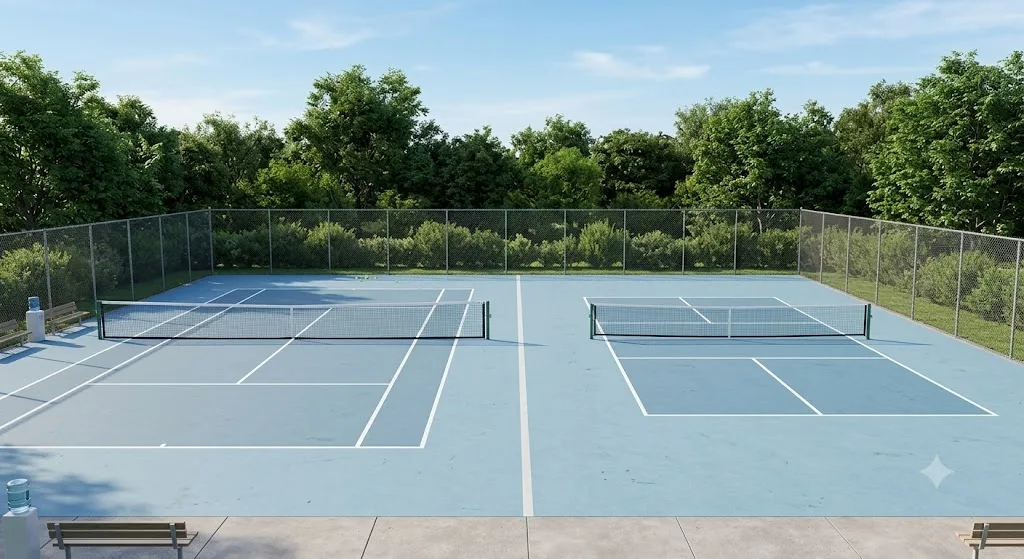
Pickleball, monsoon rain, and a booking system stuck in the past are squeezing tennis courts across Klang Valley. Here's what's actually happening.
KUALA LUMPUR — Try booking a tennis court in Klang Valley on a clear Saturday morning and you'll notice something odd: the car park is full, the courts are busy, but a lot of what's happening on them isn't tennis.
Two years ago, the court next to it might well have been a tennis court too.
Between June and December 2024, the number of pickleball venues in Kuala Lumpur went from six to seventy. Today there are more than two hundred. Nationally, pickleball has grown to more than 50 privately run arenas and over 400 courts, according to Grand Pickleball Arena founder Low Chung King — many of them built by converting existing tennis and badminton courts, because the paddle sport is cheaper to run and faster to fill.
"When I first started playing in late 2021, there were only about two small groups of regular players in Kuala Lumpur and no dedicated courts — just tennis or open-air badminton courts," Selangor Pickleball Association president Ted Thor told The Star in August 2025. "Then in 2024, the sport exploded."
The growth is genuine — Malaysia now has over 143,000 active players on the pickleball-matching app Reclub, more than any other country in Asia. But for tennis, it has a cost. In February 2025, former national junior tennis player Maria Ghazali went public with a warning: don't let the pickleball and padel boom come at the expense of Malaysia's tennis infrastructure. Her concern was specific — that facilities under pressure to fill courts quickly would keep converting tennis space rather than building new capacity for either sport.
That's one squeeze. The other two are older and harder to see, because everyone in Malaysia has simply learned to live with them.
The first is the weather. Kuala Lumpur sits at an average high of 32°C with humidity routinely above 80%, which rules out most of the middle of the day for anyone playing outdoors. Layer on the west coast monsoon — short, heavy, near-daily afternoon downpours from roughly April through October — and the playable hours on any given court shrink to two narrow windows: early morning and early evening. Everyone is trying to book the same two hours, on the same courts, every day.
The second is the booking system itself. Public courts like Tasik Titiwangsa still run in-person, first-come booking with no online queue. Private clubs go the other way with hard caps — one court per session, bookings only a few days out, two-hour limits — which keeps things fair but doesn't create a single additional court. Regulars will tell you the clearest sign of the squeeze isn't a "fully booked" sign. It's how much worse it gets the moment the forecast looks dry.
None of this means tennis in Malaysia is shrinking — pickleball's rise says the opposite: more people in Klang Valley want to play racket sports than ever. But it does mean the court you learned on ten years ago is under more pressure than it used to be, from more directions at once.
It's also the practical case for formats that don't need a full-size court to teach a real game. Mini Tennis runs on a smaller footprint — the same courts already used for pickleball or badminton work fine — which sidesteps the exact bottleneck this article is about, rather than adding to it.